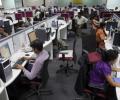
Samsung India has launched an Innovation Campus in Karnataka, in partnership with Nrupathunga University, to train 2,000 young individuals in industry-relevant AI skills. This initiative aims to support Karnataka's goal of building an AI-native ecosystem and developing a future-ready technology workforce, expanding access to practical AI education.

IIT Hyderabad and Japan's Mie University have signed MoUs to foster academic exchanges and joint research, with a strong focus on semiconductors and digital technologies. This collaboration aims to develop skilled talent and strengthen the semiconductor ecosystem in both countries.

The University of Delhi and semiconductor major AMD have signed a Memorandum of Understanding (MoU) to train up to 10,000 students and faculty in industry-relevant artificial intelligence skills over the next year. This collaboration will provide access to AMD's AI Engage Developer Programme, including its open-source ROCm AI software platform, learning resources, and developer GPU cloud credits, aiming to foster indigenous AI capabilities and bridge the gap between academia and industry.

Uttar Pradesh Governor Anandiben Patel addressed AI Manthan 2.0, advocating for the comprehensive integration of Artificial Intelligence across all university subjects rather than as a standalone course. She urged universities to develop clear, time-bound AI roadmaps covering education, research, healthcare, and agriculture, emphasising indigenous AI development, employment creation, and the importance of "Safe and Trusted AI." The event also saw the formation of an AI Policy Advisory Group and an AI Implementation Group to drive these initiatives.
Andhra Pradesh Chief Minister N Chandrababu Naidu has approved the establishment of India's first dedicated Quantum and AI University campus in Amaravati by NIELIT. This significant project, funded by the MeitY, Government of India, will focus on advanced technologies like Quantum, AI, and Semiconductors, integrating education, research, and entrepreneurship.
The University of Melbourne and the Indian Institute of Science Education and Research (IISER) Tirupati have launched a new 2+2 Bachelor of Science Integrated (Honours) dual degree. This programme offers Indian students a globally connected, research-intensive science education, allowing them to study two years at IISER-Tirupati and two years in Melbourne, graduating with two honours degrees.
The University of Liverpool and the Indian Institute of Science (IISc) have established a joint seed fund to promote research and innovation collaborations in areas such as AI, biomedicine, quantum technology, and space.

Six professors from Swami Ramanand Teerth Marathwada University (SRTMU) in Nanded have secured a patent for a 'Handheld Script Translation Device'. This innovation aims to overcome language barriers caused by different writing systems, allowing users to understand scripts they are unfamiliar with, even if they know the language. The device is expected to particularly benefit Marathi readers and researchers by making historical and cultural texts more accessible.

Karnataka Chief Minister D K Shivakumar announced the establishment of India's first government-driven Artificial Intelligence University and an AI Hub in Bengaluru. This initiative aims to position Karnataka as a global leader in responsible AI innovation, fostering talent, research, and collaboration. The state seeks to become an AI-native state, leveraging AI to improve governance and daily life across various sectors.

SCTIMST and Invasive Technologies have launched "Chitra Core," a new drug-eluting coronary stent designed with significantly less metal to reduce complications. This indigenous innovation, developed in collaboration, aims to provide advanced and cost-effective cardiac care, building on decades of Indian medical device development. The institute is also developing a unique TiN-coated stent for global markets.

Union Health Secretary Punya Salila Srivastava highlighted the strong health cooperation within BRICS, emphasising the critical role of digital health and artificial intelligence in ensuring continuity of care. Speaking at the 16th BRICS Health Ministers' meeting, she noted shared challenges among member nations and showcased India's advancements in digital health infrastructure and AI strategy.
Technopark-based space-tech startup HEX20 has been selected by the UAE Space Agency to develop a spacecraft for an asteroid probe, marking the first time an Indian private company has been chosen for a deep-space mission by the Gulf nation. HEX20 is contributing its expertise in developing the spacecraft bus and software for the Emirates Mission to the Asteroid Belt, which is scheduled for launch in March 2028 to study asteroid 269 Justitia.

An Indian-origin engineer couple, Anuradha and Vikas Sinha, have donated $20 million to the University of North Texas (UNT) to establish the Anuradha and Vikas Sinha College of Artificial Intelligence and Advanced Analytics. This significant gift aims to create new opportunities for students and faculty, focusing on building and deploying intelligent systems and understanding their operation within human contexts. The donation underscores the couple's belief in education and immigrant contributions to the American dream, supporting leadership, scholarships, professorships, research, and entrepreneurship.

A new study analysing over 33,000 cancer journal articles has uncovered widespread citation manipulation by "research paper mills". These fraudulent organisations artificially inflate citation counts, a key academic performance metric, for thousands of articles. The suspect papers show unusually high citations but low readership, distorting scientific evidence and potentially slowing progress.

India has strongly criticised the US decision to suspend the Permanent Labor Certification (PERM) program for eight major IT firms, including Indian giants like TCS and Wipro. New Delhi also condemned US Vice President JD Vance's description of foreign professionals as "indentured servants," calling it "unwarranted and deeply offensive." The move is expected to impact thousands of Indian tech professionals seeking permanent residency in the US and further strains bilateral ties.

Bringing international recognition to Assam, young scientist Dr Shekhar Suman Bora has been honoured with the prestigious 'University Innovator Award' at the 2026 Texas Innovation Conference & Awards held in the United States.
A study suggests that targeting the brain's default mode network (DMN), which becomes active during self-reflection, could be a more effective approach to managing chronic low back pain. Researchers found that DMN activates during chronic pain flares, unlike its deactivation during acute pain, indicating chronic pain is deeply linked to one's sense of self. This finding explains why traditional symptom-based treatments often fail and points towards mind-body and psychedelic therapies.

Cathy Li, Head of the Centre for AI Excellence at the World Economic Forum, advocates for integrating AI literacy into India's education curriculum and incentivising AI companies to prioritise child safety. She stresses the need for localised solutions that account for India's linguistic and cultural diversity, as well as varying levels of connectivity and digital literacy, to ensure AI systems are safe and beneficial for children.

TEXMiN Foundation, IIT (ISM) Dhanbad has signed an agreement with the University of Pretoria, South Africa, for research collaboration in critical minerals, rare earth element processing, recycling, extraction technologies and advanced mining innovation.
Two IIT Gandhinagar students have developed "TrustGate," an AI-based cybersecurity system designed to protect critical infrastructure like water treatment plants and power grids. The system uniquely combines network traffic and physical sensor data to detect sophisticated cyber attacks, identify affected equipment, and provide real-time alerts to operators, earning them an international award.
Researchers have discovered a method to externally manipulate a cell's automatic waste clearance process, known as autophagy. This breakthrough, involving the protein LC3, could offer new therapeutic targets for diseases like cancer and Parkinson's, where cellular cleansing mechanisms are often impaired.
Dr Komal Verma Saluja, a final-year student at Government Medical College Kota (GMCK), has been awarded the "Researcher of the Year Award 2026" by the India chapter of the American College of Physicians (ACP). She is the youngest and first medical student to receive this prestigious accolade. Saluja's research includes identifying an imaging biomarker for early cognitive decline in type 2 diabetes and developing a diagnostic method for fatty liver disease using echocardiography. Her achievements have brought pride to GMCK and highlight the need for more novel diagnostic and therapeutic research in India.

The University of Sheffield has announced a major milestone in the push for greener aviation as it produces its first report from testing a new sustainable aviation fuel (SAF). The research is helping support the faster rollout of low-carbon jet fuels.

Tata Consultancy Services (TCS) has stated that the recent suspension of eight IT firms, including itself, from a US green card programme will not impact its workforce strategy or customer engagements, citing its low number of applications and focus on local hiring.

Adobe has announced Anil Chakravarthy as its new president and CEO, succeeding Shantanu Narayen, who will transition to executive chair. Chakravarthy, an alumnus of Banaras Hindu University and IIT, will assume the role on December 1, leading the company into an AI-driven era.
Researchers at MIT World Peace University in Pune have developed an innovative thermal energy storage system using a phase change material (PCM)-based battery. This technology addresses the intermittent nature of solar energy by storing excess heat for use after sunset, potentially reducing reliance on conventional fuels for water heating and enhancing energy security.
Industry experts advocate for India to develop its own artificial intelligence (AI) safety framework, distinct from US or EU models, to address unique challenges like deepfakes and cyberattacks. They call for a comprehensive commitment involving all stakeholders and a hybrid regulatory approach combining voluntary and binding measures, as the Indian government also considers new AI regulations.
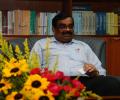
Researchers at IIT Kharagpur, in collaboration with the University of Illinois Urbana-Champaign, have developed a highly sensitive sensor technology. This innovation allows ordinary smartphone cameras to detect extremely tiny, invisible objects, potentially leading to low-cost, portable medical testing and other applications requiring the detection of minute substances.
West Bengal has launched an Emerging Quantum and Semiconductor Technologies (EQST) section at CSIR-CGCRI to attract investments and position the state as a hub for next-generation technology. Minister Kalyan Chakraborti highlighted India's need to invest in these crucial sectors and outlined the state's plans to collaborate with institutions and leverage budget initiatives to foster research and start-ups.
Experts at a national symposium in Shillong discussed the role of Artificial Intelligence in tourism, emphasising that AI should support human judgment, local knowledge, and cultural values rather than replace them. Discussions highlighted the need for robust policies to address ethical concerns, safeguard livelihoods, and preserve cultural heritage while leveraging AI for innovation and sustainability in the tourism sector, particularly in Meghalaya.
NVIDIA has acquired AI startup Hugging Face for USD 12.9 billion, aiming to scale its platform, strengthen infrastructure, and expand AI access for developers and institutions globally while maintaining an open ecosystem.
NVIDIA has acquired AI startup Hugging Face for USD 12.9 billion, aiming to scale its platform, strengthen infrastructure, and expand access to AI for developers and institutions worldwide while maintaining an open ecosystem.

Researchers at the Indian Institute of Technology Madras (IIT,M) have developed a novel "morphing skin" concept for aircraft wings, inspired by bird flight. This adaptive external skin dynamically reshapes in real time to prevent aerodynamic stalls, enhance lift, reduce drag, and significantly improve aircraft safety and fuel efficiency. The technology holds promise for commercial aviation, unmanned aerial vehicles, and defence applications.

The second season of the Archery Premier League (APL) is set to commence on October 8 in Hyderabad, featuring a strong lineup of India's top archers, including Olympians Deepika Kumari and Atanu Das, alongside 12 international stars like world number one Marcus D'Almeida. The league will showcase 36 Indian archers competing in both recurve and compound categories, with a unique 15-second shot clock designed to enhance competition.
Prof Ajit Kumar Chaturvedi, Vice-Chancellor of Banaras Hindu University, highlighted Artificial Intelligence's transformative potential in healthcare, emphasising its role in augmenting doctors' capabilities and enhancing efficiency. Speaking at PGIMER's Foundation Day, he stressed the need for India to develop AI solutions tailored to its unique healthcare realities, moving beyond being a mere consumer of Western-trained systems. PGIMER Director Vivek Lal also detailed the institute's expansion and commitment to affordable healthcare.
A new MoU between the Centre for Cellular and Molecular Platforms (C-CAMP) and Imperial College London has paved the way for deepening India-UK ties in the life sciences sector.

China's Tiangong Ultra humanoid robot has set a new 100-metre sprint record of 8.86 seconds at the World Humanoid Robot Games in Beijing, significantly surpassing Usain Bolt's human world record of 9.58 seconds.

Competition Commission of India (CCI) chairperson Ravneet Kaur has warned that the rapid adoption of artificial intelligence (AI) could intensify anti-competitive practices in digital markets, including self-preferencing, discriminatory pricing, and market manipulation. She highlighted the CCI's ongoing study into AI's impact on competition and stressed the regulator's role in fostering growth while preventing abuse of dominance.

Sculptor Akash Tirmal explains how he designed the 22 feet idol of Ganesh Galli's MumbaiCha Raja using Plaster of Paris, without any readymade moulds.

The National Council of Educational Research and Training has reconstituted the Textbook Development Team for class 11 and 12 political science with a mandate to integrate cultural rootedness, Indian knowledge systems and inclusion, with at least four of the members having direct or indirect links with the RSS.
